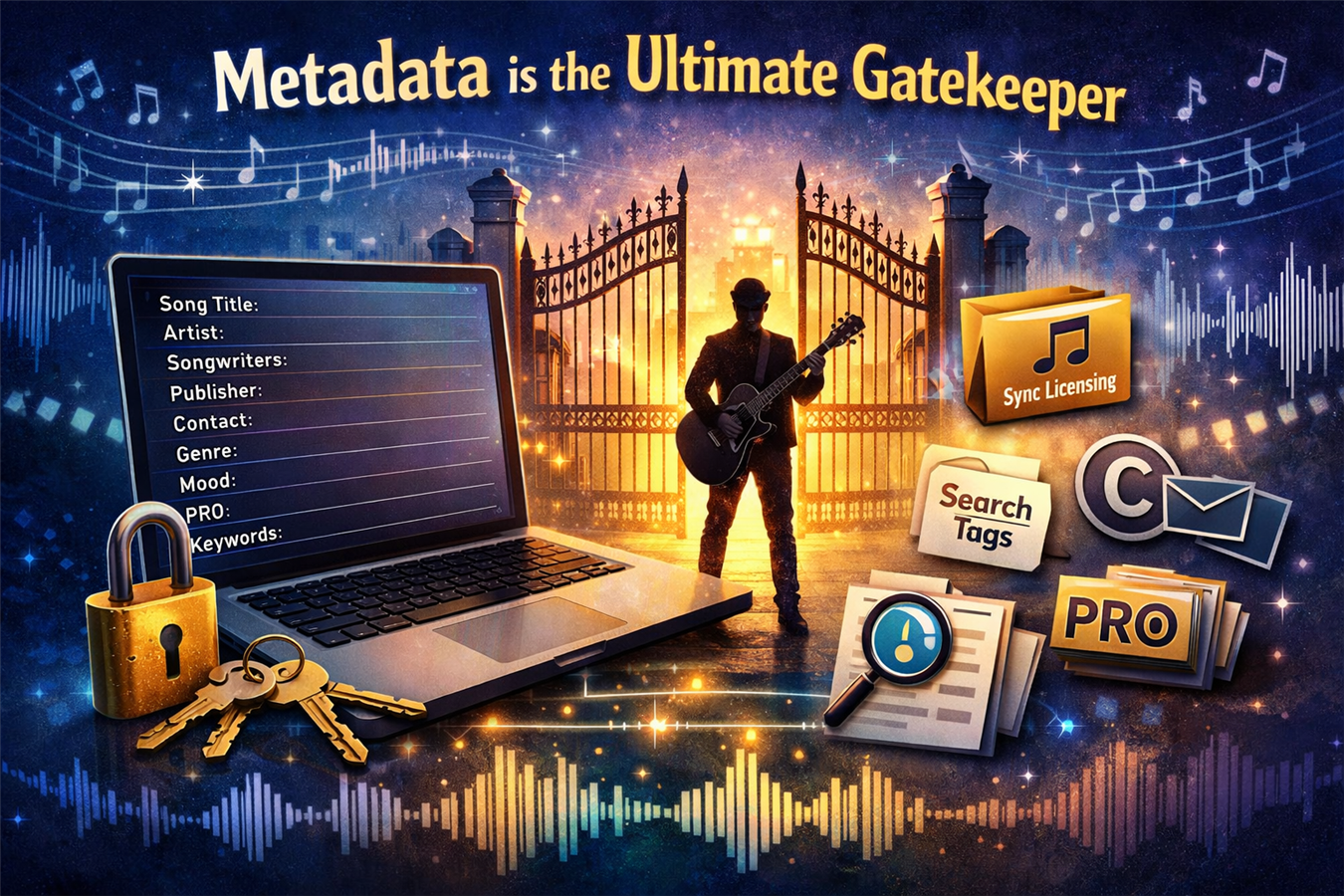
In today's music industry, talent and persistence isn't just what opens doors - metadata does. It might not be glamorous but metadata has quietly become the ultimate gatekeeper between your music and real sync opportunities.
Think of metadata as the identity card for your song. It's everything that sits behind the audio: songwriter names, publishers, contact details, genres, moods, keywords, PRO affiliations, and more. To a music supervisor, a sync agent, or even a streaming platform algorithm, this information is often just as important as the track itself.
Here's the reality: if your metadata isn't clear, complete, and accurate, your music is far less likely to be discovered - even if it's incredible.
For people trying to break into sync licensing, this becomes even more critical. Music supervisors don't have time to chase down missing information. If they can't quickly see who owns the track, who to contact, and whether it's safe to license, they'll move on. Not because your song isn't good - but because it's not usable.
That's where metadata becomes a gatekeeper. It doesn't judge your creativity - it determines your accessibility.
The good news is that this is something completely within your control.
Start with the basics. Make sure every track you pitch includes accurate songwriter and publisher information. Even if you're independent, clearly list yourself and include up-to-date contact details. If you're registered with a performing rights organization, include that too. These small details signal professionalism and make it easier for industry professionals to say "yes."
Then go deeper. Think about how your track might be searched for. What mood does it evoke? Is it uplifting, dark, nostalgic, or high-energy? What genre and subgenres does it fit into? Are there specific instruments or production styles that stand out? These keywords are how your music gets surfaced in searches, whether it's on a sync platform or within a music supervisor's internal database.
Consistency also matters. Using different names, spellings, or inconsistent data across platforms can create confusion and slow things down. The smoother you make the process, the more likely your music will be considered - and ultimately licensed.
Another important shift is mindset. Metadata isn't admin work - it's marketing. It's how you position your music in a crowded marketplace. Two identical tracks can have completely different outcomes based on how well they're tagged, described, and presented.
And as AI and automation continue to shape the industry, metadata is becoming even more powerful. Systems are increasingly relying on structured data to recommend, filter, and match music to opportunities. If your metadata is strong, you're essentially speaking the language these systems understand.
The rights holders who embrace this now will always have a clear advantage.
At the end of the day, your music deserves to be heard - but first, it needs to be found. Metadata is what bridges that gap. It's the quiet force working behind the scenes, opening doors, building trust, and making your music accessible to the people who can actually use it.
Treat it with the same care you give your sound, and it will start working for you - not against you.