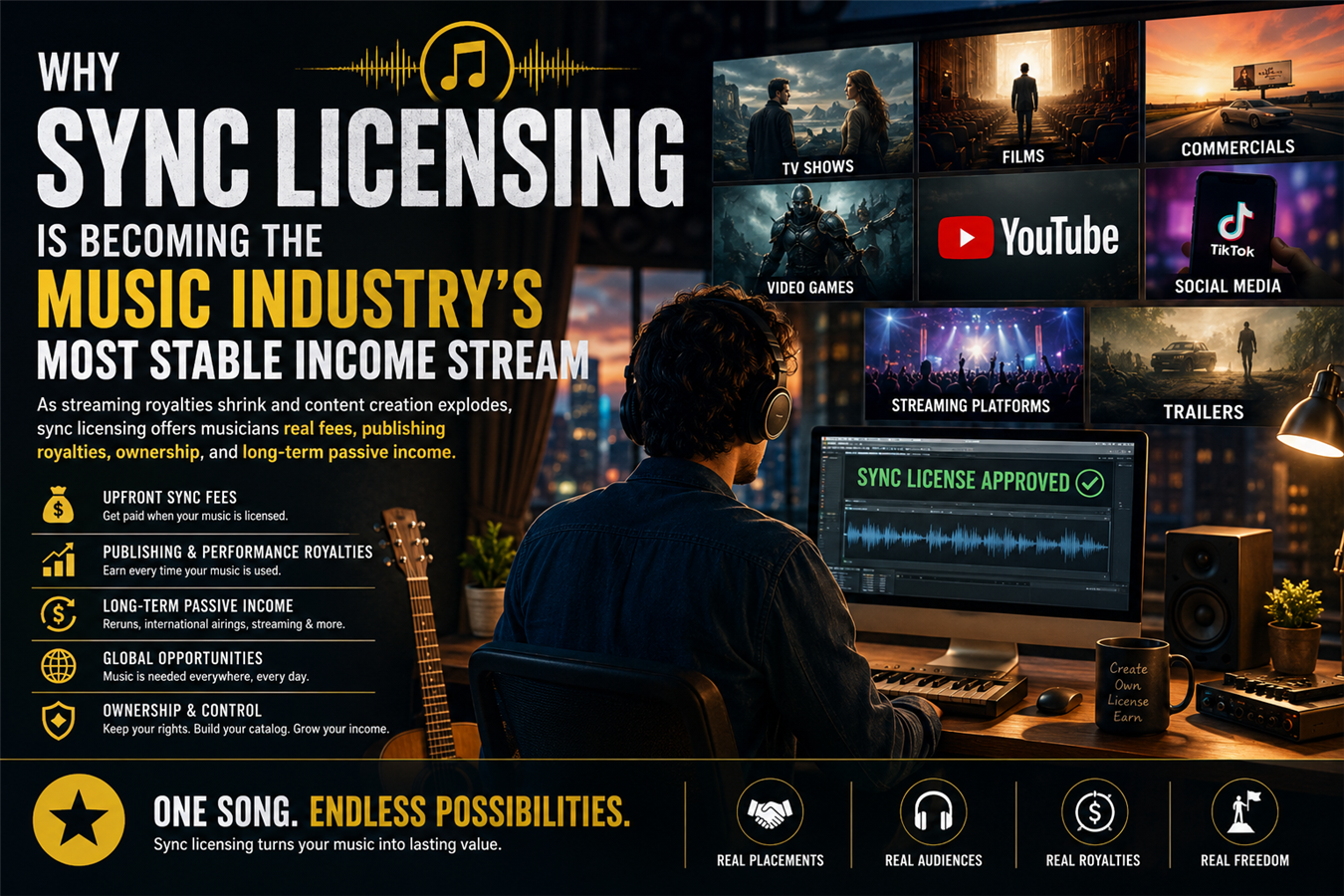
For decades, musicians have relied on record sales, touring, and more recently streaming royalties to generate income. Today, however, the music industry is undergoing a major shift. As streaming payouts remain low and social media platforms continue changing their algorithms, more artists are looking for reliable ways to build sustainable careers.
One revenue stream that continues to stand out is sync licensing.
Sync licensing - the process of licensing music in TV shows, films, commercials, trailers, video games, streaming content, and online media has rapidly become one of the most dependable sources of income available to independent musicians, composers, and producers.
The reason is simple: the world is creating more visual content than ever before.
Every day, streaming platforms, television networks, advertising agencies, gaming companies, production studios, and content creators require music to bring their projects to life. The explosive growth of platforms such as Netflix, Disney+, Amazon Prime Video, YouTube, and social media advertising has created an unprecedented demand for licensable music.
For music supervisors, finding high-quality songs that are affordable, authentic, and easy to clear has become a constant priority. This has opened the door for independent artists who own both their masters and publishing rights also known as 'one-stop'
Unlike streaming revenue, which often requires millions of plays to generate meaningful earnings, a single sync placement can produce multiple income streams. Musicians can earn an upfront sync fee, performance royalties, publishing royalties, and ongoing backend income whenever the content airs, streams, or is broadcast internationally.
In many cases, one successful TV sync placement, film placement, or commercial licensing deal can continue generating royalties for years.
Another reason sync licensing has become such a stable income source is accessibility. Artists no longer need a record deal to participate in the licensing market. Advances in home recording technology, direct music supervisor contact directories, sync agencies, and music libraries, have made it possible for creators to build and pitch music catalogs from virtually anywhere in the world.
This shift has also aligned with a growing focus on ownership. More musicians now understand the long-term value of controlling their masters, publishing rights, and licensing decisions. Because sync licensing rewards ownership, independent artists are often in a stronger position than ever before.
Music supervisors frequently prefer working with one-stop music catalogs because the licensing process is faster, simpler, and more efficient. When an artist can immediately approve a license without navigating multiple rights holders, they become significantly more attractive to buyers.
Perhaps the most important trend driving growth is the increasing demand for authentic music.
As AI-generated content and generic production tracks become more common, many supervisors and brands are actively seeking real music with genuine emotion, distinctive character, human storytelling, and unique sonic identities. Vintage recordings, retro-inspired productions, cinematic instrumentals, indie folk, tension cues, uplifting commercial tracks, and emotionally driven songs continue to attract strong interest across the licensing market.
For artists with niche sounds, this creates opportunities that simply did not exist a decade ago.
What was once viewed as a supplemental revenue stream is now becoming the foundation of many successful music careers. Instead of relying solely on streaming numbers, musicians are building diversified income through sync fees, publishing royalties, performance royalties, and long-term catalog value.
As global content production continues expanding throughout 2026 and beyond, demand for quality music licensing is expected to increase alongside it.
For artists seeking stable music income, passive revenue, creative independence, and long-term ownership, sync licensing is no longer just an opportunity - it is rapidly becoming one of the most resilient business models in the modern music industry.